

Fins, Fenders, and 140 MPH: Remembering the Cars of My Youth
By Murray Montgomery - Staff Writer
Once upon a time, I could just look at a car and tell you the year, make, and model of the vehicle. My memories are mostly of cars produced from the 1950s through the 1970s, but those days are long gone. Nowadays, all the cars look alike to me—especially the SUVs. Back in the day, cars had personality. Car lovers like myself had no problem identifying a Ford, Chevy, or a Mopar product (Dodge, Plymouth, Chrysler, just to name a few). Many car models have been discontinued over the years, but their names are still remembered by old-timers like me.
The decades spanning the 1950s through the 1970s produced some of the most iconic and enduring automobiles in history. These classic cars reflected not only advances in engineering and design but also the shifting cultural moods of postwar America—from optimistic excess to rebellious performance and, finally, adaptation under new constraints. Their chrome, curves, and raw power continue to captivate collectors and enthusiasts today.
The 1950s marked a golden age of automotive exuberance. Fresh from World War II, American manufacturers embraced bold styling and powerful V8 engines as symbols of prosperity. Massive chrome grilles, exaggerated tailfins, and two-tone paint schemes defined the era. The Chevrolet Bel Air, particularly the 1955–1957 “Tri-Five” models, became an instant classic with its sleek lines and available small-block V8. Ford’s Thunderbird introduced the personal luxury car in 1955. After graduating from high school, my first car was a 1955 Ford Fairlane. I put fender skirts on it and thought I was quite a “cat.” But I digress; Cadillac’s Eldorado pushed opulence further with towering fins and lavish interiors. These cars were rolling statements of confidence, designed for wide-open highways and a growing middle class eager to display success.
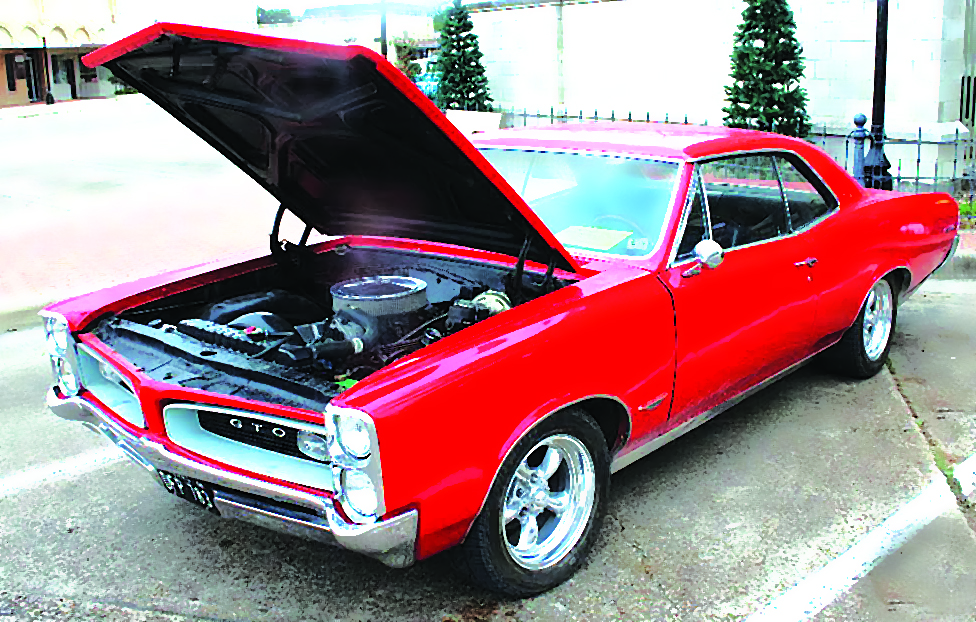
By the 1960s, the focus shifted toward performance and youth culture. The muscle car era was born when Pontiac dropped a powerful engine into a relatively lightweight intermediate body, creating the GTO in 1964. Ford answered with the Mustang, a compact, affordable pony car that could be ordered with serious power and customized extensively. Chevrolet’s Camaro and Corvette, along with Plymouth’s Barracuda and Dodge’s Charger, joined the fray. Horsepower ratings climbed rapidly—often exceeding 400—while styling grew more aggressive with long hoods, short decks, and racing stripes. These vehicles captured the spirit of freedom, rock-and-roll, and a generation that valued speed over pure luxury. Drag strips and street racing culture thrived alongside them. It was during this period that I purchased a 1969 Dodge Coronet R/T. It was yellow, with a black vinyl top and black interior. It was equipped with a 440 Magnum engine. This was the fastest car I ever owned. I saw 140 MPH on it one dark night, but that’s another story.
The 1970s began with the muscle car movement still strong. Models like the Dodge Challenger R/T, Plymouth ’Cuda, and Chevrolet Chevelle SS offered some of the most potent street machines ever built. On a personal note, I bought a 1970 Dodge Challenger, brand new and right off the showroom floor. It was the first one purchased in Brazoria County, Texas, and it was fast. However, the decade brought challenges. Stricter emissions regulations, rising insurance costs, and the 1973 oil crisis forced manufacturers to detune engines and prioritize fuel economy. Compression ratios dropped, and performance figures declined.
Across these three decades, classic cars shared certain enduring qualities: robust construction, distinctive styling that prioritized presence over pure efficiency, and engines that delivered character as much as power. Many featured simple mechanical systems that remain relatively easy to maintain and modify, contributing to their lasting appeal among restorers. Today, well-preserved examples command high prices at auctions, while modern reinterpretations—such as the current Ford Mustang, Dodge Challenger, and Chevrolet Camaro—pay homage to their predecessors.
The classic cars of the 1950s, 1960s, and 1970s remain more than transportation. They are cultural artifacts that capture the optimism, rebellion, and eventual rationality of their times. Whether gleaming with 1950s chrome, thundering down a 1960s drag strip, or cruising as a 1970s muscle survivor, these machines continue to evoke a sense of freedom and individuality that few modern vehicles can match. Their legacy endures on roads, in museums, and in the imaginations of anyone who appreciates automotive history.