

Surviving Hell: One Veteran's Journey Through the Death March
BY MURRAY MONTGOMERY
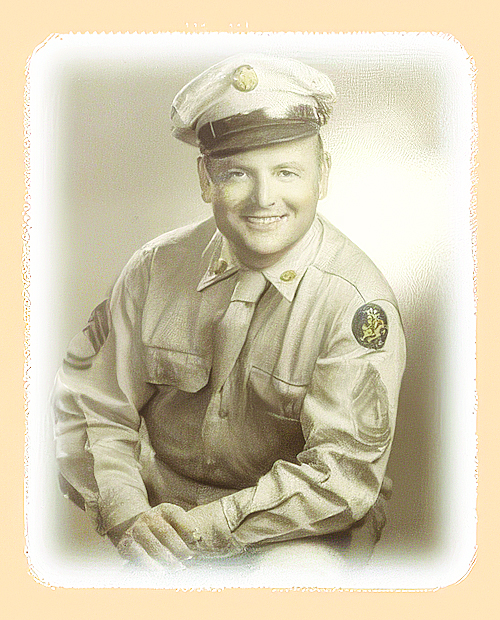
There is an old saying I have heard all my life, and it is just as true today as it was years ago: "Freedom is not free." Should anyone be foolish enough to think our liberty comes without a heavy price, I invite them to consider the sacrifices made by Russell A. Grokett, Sr. during World War II.
Grokett was part of what has been called the "Greatest Generation." He was raised in Kansas and lived through the Great Depression. When he was in his twenties, he joined the Army and served in one of the last cavalry units in Texas. He later experienced the horrors of war firsthand during the Battle of the Philippines, where he was imprisoned and survived the terror of the Bataan Death March.
When United States and Filipino troops surrendered to the Japanese on April 9, 1942, Grokett became a prisoner of war. He would spend the next three and a half years living in hell. There were approximately 76,000 men involved in the surrender of the Philippines—some 12,000 U.S. troops alongside 64,000 Filipinos. Nine thousand of them died as a direct result of the Bataan Death March.
Grokett's description of the march is a vivid account of something so horrible it is hard for civilized people to imagine. He said the prisoners, both military and civilian, were forced to go 24 hours without food or water in the searing heat and humidity. If a man dropped out from heat exhaustion, Japanese guards promptly bayoneted him. Japanese planes kept an eye on the march, flying back and forth up and down the line. As they walked, the prisoners passed corpse after corpse along the road. According to Grokett, "The bodies were stiff and beginning to blacken in the intense heat, already covered with flies as carrion birds tore at the flesh."
He also told of a game played by the Japanese guards, noting they would amuse themselves by pushing prisoners over cliffs. Their screams could be heard until they crashed upon the jagged rocks below. He recalled how the Filipinos had the worst of it. "Young girls were pulled out of the ranks and raped repeatedly. Frightened mothers would rub human dung on their daughters' faces to make them unattractive to the guards," said Grokett.
Later on, the Japanese made the prisoners trot at double time up a steep slope. Men were dropping everywhere and were bayoneted on the spot. As they passed a freshwater stream, many of the thirsty prisoners made a run for the cooling water; those who did were shot. Many of the prisoners contracted malaria from mosquitoes and went insane. Grokett also remembered that there was still a battle ongoing at Corregidor. He said, "Big tractors pulling 250-millimeter guns toward the bay rolled over the bodies of the dead and dying along the road."
After the ordeal of the death march, Grokett and the others spent time in prisoner-of-war (POW) camps. Later, they were forced onto boats to begin a voyage aboard what would become known as "The Hell Ships." They were packed like sardines on these vessels for some 33 days. During that time, Dutch submarines attacked the ships, unaware that American prisoners were onboard.
While the ships were being attacked, Grokett remembered that the men began screaming and pounding against the hull. "Even an animal can't be this confined for this long without going mad," he said. Of the eleven ships carrying prisoners, only five survived the attacks, and thousands of POWs died. Before the ships finally arrived at Pusan Harbor in Korea, many of the men went insane, and some committed suicide. There were reports that several desperate men cut their buddies' wrists to drink the blood due to a lack of water.
Russell A. Grokett, Sr. and the other survivors were finally liberated on August 15, 1945. After the war, Grokett married and raised a family. He loved to travel throughout the United States, camping and fishing in the country he helped defend. He died of a heart attack at the age of 69. His story has since been told in the book The Circle Is Never Broken by Estelle Grokett.