

Hank Williams left us 70 years ago today
Seems the music legend likely spent his final days on this earth right here in our area, too, if only passing through...

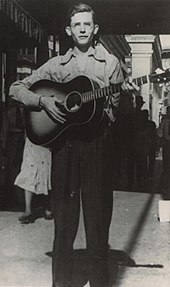
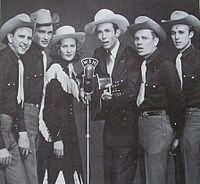
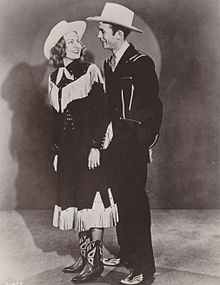
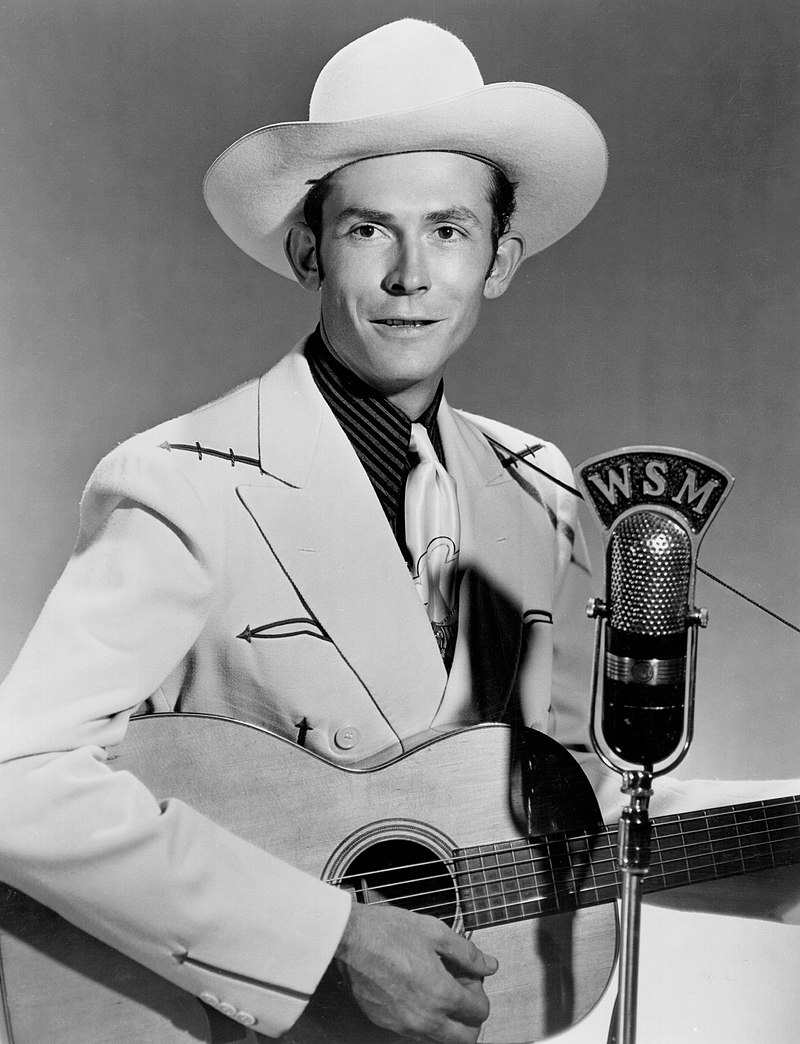
For all his troubles with drugs and alcohol and women, the Hank Williams of late 1952 could do little wrong among his legions of fans.
It was the year that produced such undisputed classics as “Honky Tonk Blues,” “Jambalaya (On the Bayou),” “Settin’ the Woods On Fire” and “You Win Again,” songs as distinctive and recognizably Hank today as they were when they first topped the country charts 70 years ago.
That summer, frail and ill, Williams was at Castle Studio in Nashville recording a song that he and co-writer Fred Rose gave a deliberately jokey, irreverent title. But then, just like that, it became prophecy as much as it ever was a song, with words as haunting as they were poignant.
“I'll Never Get Out of This World Alive” entered the country charts on Dec. 20, 1952. Twelve days later, on New Year’s, 1953, Hank Williams was dead.
The lyrics and tone of the song might have been amusing if they weren’t associated with the tragedy that unfolded.
Enroute to a gig in Canton, Ohio, on Jan. 1, 1953, Hank’s heart finally gave out, worn down by the years of bad marriages and bad booze. It was simply too much for his worn-out body, especially when topped off with the cocktail of pills his ex-con quack of a doctor doled out to him by the palmful following a botched back surgery earlier that year.
So it came to pass that in the back seat of his powder blue Cadillac while traveling on a cold, snowy highway through the West Virginia backwoods, a haggard and hollow-eyed Hank Williams went to meet his maker.
Charles Carr—the college kid Hank hired to get him place to place, given his usual condition—wouldn’t know it for hours still, though never much more than arm’s length away. Not until he stopped for gas did Carr realize Hank had passed. By then, rigor mortis had already in.
Hank was just 29.
Some three weeks later, “I'll Never...” became Hank’s eighth country No. 1, in a professional music career that might’ve have spanned his entire lifetime but, in reality, lasted just four years.
The MGM single thus became the last in an all-too-short career that almost immediately assumed iconic proportions. The truth is that Williams’ popularity was so widespread that they would probably have gone to the top anyway, and indeed his next three posthumous singles — the double-sided “Kaw-Liga” and “Your Cheatin’ Heart” and “Take These Chains from My Heart” — were all chart-topping songs, too.
Born Hiram King Williams in Mount Olive, Alabama, to a family of strawberry farmers and log company workers, according to the Country Music Hall of Fame.
In addition to growing up dirt poor during the Great Depression, Williams also fought another struggle. He was born with a spinal deformity, which left him in constant pain his whole life, not helped in the least by his rough and tumble existence.
While his deformity alone might’ve spared him from the military, for instance, it was a recent rodeo injury from failed drunken bull ride in Texas that reaggravated his back problems that ultimately barred him from the service when the fighting started after Pearl Harbor.
It was a lifestyle he kept to the very end. Hank’s autopsy revealed hemorrhages in his heart and neck, so his official cause of death was ruled a heart attack but the medical examiner also noted that Williams had been severely beaten and kicked in the groin recently (wounds he picked up during a fight in a Montgomery bar a few days earlier).
In fact, the local magistrate called on to attend the death, Virgil F. Lyons, ordered the inquest concerning a welt that was visible on Williams’ head.
He started playing the guitar at the age of 8 and made his first radio debut at age 13. He moved with his mother in 1937 to Montgomery, Alabama, where Hank, now 14, formed his first band, Hank Williams and his Drifting Cowboys.
When his bandmates left for the war, however, Hank spent time between Montgomery, where he played his music, and Mobile, where he worked in shipyards, according to the Country Music Hall of Fame. Williams married Audrey Mae Sheppard, his manager, in December 1944, and began piecing the Drifting Cowboys back together.
It took several tries and many a night on the road playing some real dives, but his songwriting eventually struck gold. "Lovesick Blues" proved a big hit in 1949, allowing him to join the Grand Ole Opry that same year, one of his life-long dreams.
He was the first artist ever to receive six encores at the Opry, and later that year, Audrey Williams gave him a healthy baby boy, Randall Hank Williams, better known today as Hank Jr., who at 73, had a rather successful career as a songwriter and performer in his own right.
Known for his ability to churn out hits like "I’m So Lonesome I Could Cry," "Jambalaya," and "Hey, Good Lookin'," Hank Sr. was soon deemed the "Hillbilly Shakespeare" of his time.
As is often the case for folks like Hank Sr., however, success never lasts long. When he took a spill on a hunting trip in 1950 and reinjured his back, he numbed it, best he could, with alcohol, pain pills and morphine.
Must’ve worked for a while, too, because his infidelities on the road led to his first divorce with Audrey not long after. They’d patch things up a few months later and rekindled their turbulent marriage once more, but when she caught him cheating again, Audrey had enough.
She left him for good in the spring of 1952, right about the same time he was let go by the Grand Ol’ Opry, for habitual drunkenness and constant absenteeism.
Shortly after, Hank met and had a brief affair with Bobbie Jett, which ultimately produced another child—Jett Williams, born five days after Hank died in the backseat of his Cadillac on New Year’s Day—but it would be singer Billie Jean Jones who ultimately stole his heart.
The two wed in October of 1952, and two months later, Williams died of a bad heart.
Not before passing through our own humble patch of earth before he did, however. Cast out by the Opry and having burned most of his bridges in the music business with his drinking and no-shows, Williams found himself with a bad case of performance banishment.
So, he went back to where he got his first big break, with the Louisiana Hayride in Shreveport, Louisiana. They set up a Texas tour in mid-December of 1952 that would have him performing in Houston, Victoria, San Antonio, Dallas, Snook (just west of College Station) and finally, Austin.
Houston did not go well. Hank got tanked just before showtime and was booed off the stage, twice, at Cook's Hoedown Supper Club in downtown Houston on Dec. 14. Then they were off to Club Westerner in Victoria, and despite bandmates best attempts at sobering him up, it was no use. It’s said they made it all the way to the parking lot, but never even bothered getting out of the car.
With Warren Stark, the owner of the legendary Skyline Club in North Austin and promoter who booked the six shows on this Texas tour, now riding shotgun to keep Hank in line, things went only slightly better.
In San Antonio, Hank took the stage and managed to perform the whole show at The Barn Dancehall on the Dec. 16. After, they made the Sportatorium in Dallas on Dec. 17, then a small theater in the tiny crossroads of Snook on Dec. 18, and finally wrapped things up at the Skyline Club in Austin on Dec. 19.
Lee Lenox, longtime performer with Victoria staple, The Taylor Bros. Band, shared about the experience in the Victoria Advocate back in January 2010.
“Stark has said that Hank did OK at these final shows except at the Skyline. The legend of Hank's last concert is contradictory to what really occurred. It wasn't the grand hoorah, best show that Hank Williams ever performed as legend has it,” he said.
“Instead, Hank played one 30-minute set, took an intermission while the backup acts played, then came back on for a second set. Two or three songs into the second set, Hank was helped off stage by Stark, sweating profusely and shaking uncontrollably. As the band played on, Stark called an ambulance and slipped Hank out the back door of the club and was taken to Brackenridge Hospital in Austin. His blue Cadillac sat in the Skyline's parking lot for a couple of days before someone came and took it,” Lenox said.
Hank had been fighting a cold or the flu for weeks. He’d also complained of chest pains and shortness of breath for the past six months, but he wouldn't go see a doctor, he added.
“Because of complications related to his spine, plus the effect of the booze and drugs, he suffered from constant incontinence. His weight and appearance had fluctuated drastically in the final months<” Lenox said. “After the Texas shows, Hank returned to his mother's boardinghouse in Montgomery for the holidays but spent most of his final days sick in bed with the flu.”
He summed up with a truly telling statement: “The biggest singing star in America had only three shows booked in the future, one in Charleston, West Virginia, on New Year's Eve, a show in Canton, Ohio, on Jan. 1, and one show in Oklahoma City in February.”
Hank Sr. never lived to play any of them.
Song producer and cowriter Fred Rose passed away at the end of 1954. Fittingly, he and Hank joined Jimmie Rodgers as the first three inductees of the Country Music Hall of Fame when it was founded in 1961.
Williams was also the Songwriters Hall of Fame in 1970, the Rock and Roll Hall of Fame in 1987, and the Native American Music Awards Hall of Fame in 1999.
The Pulitzer Prize jury awarded him a posthumous special citation in 2010 for his "craftsmanship as a songwriter who expressed universal feelings with poignant simplicity and played a pivotal role in transforming country music into a major musical and cultural force in American life."
Like so many other musical talents that would follow in his bootsteps, Hank Williams was an amazing talent whose life ended too soon.
His funeral became one of the biggest spectacles ever to occur in Montgomery, Alabama, both before or hence. An estimated 25,000 people passed by his silver casket, and the Montgomery Auditorium was packed with 2,750 mourners. His remains are interred at the Oakwood Annex in Montgomery.
Almost as though he knew his days were numbered, Hank developed a habit of constantly jotting down lyrics on napkins, receipts, hotel stationery and any other scrap of paper that would take ink.
His personal life may have been in shambles – fraught with benders and violent fights with his wife, Audrey, as well as random hecklers on the road – he kept track of these lyrical fragments meticulously, piecing them together and writing out completed songs and verses in a series of notebooks he carried around in a worn leather satchel.
When Hank died early Jan. 1, 1953, enroute to Canton, Ohio, he left some 70 songs written down in those notebooks, some finished and others consisting of only a verse or two. None, however, were set to music.
Maybe he had the melodies in his head, or perhaps he knew he could work them out Rose in the studio. But it wasn’t until about a decade ago that anyone dared even touch them, and it came by way of music legend Bob Dylan, and a collaboration of some of music’s best.
Even in their written form, they are intrinsically Hank songs, with a plainspoken poetry and dignified heartache that had always been his signature.
One can only wonder, though, how many of those words on a page, as only he could deliver them, may have been the next “Your Cheatin’ Heart,” “I’m So Lonesome I Could Cry,” or “Honkey Tonk Blues.”
Hank probably said it best himself: “I’ll Never…”