

They roared out of the sky over China to attack enemy planes
Flying Tigers were outnumbered in nearly every engagement
By Murray Montgomery
Staff Writer
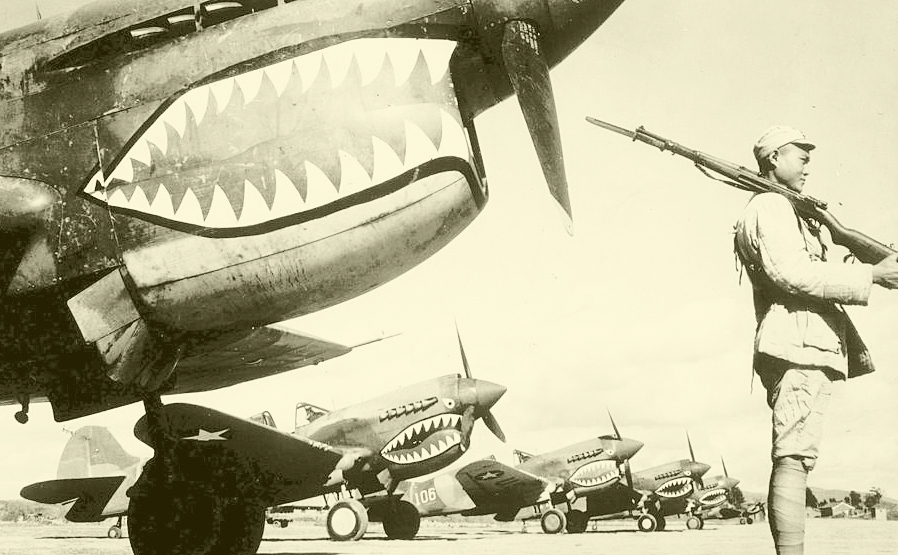
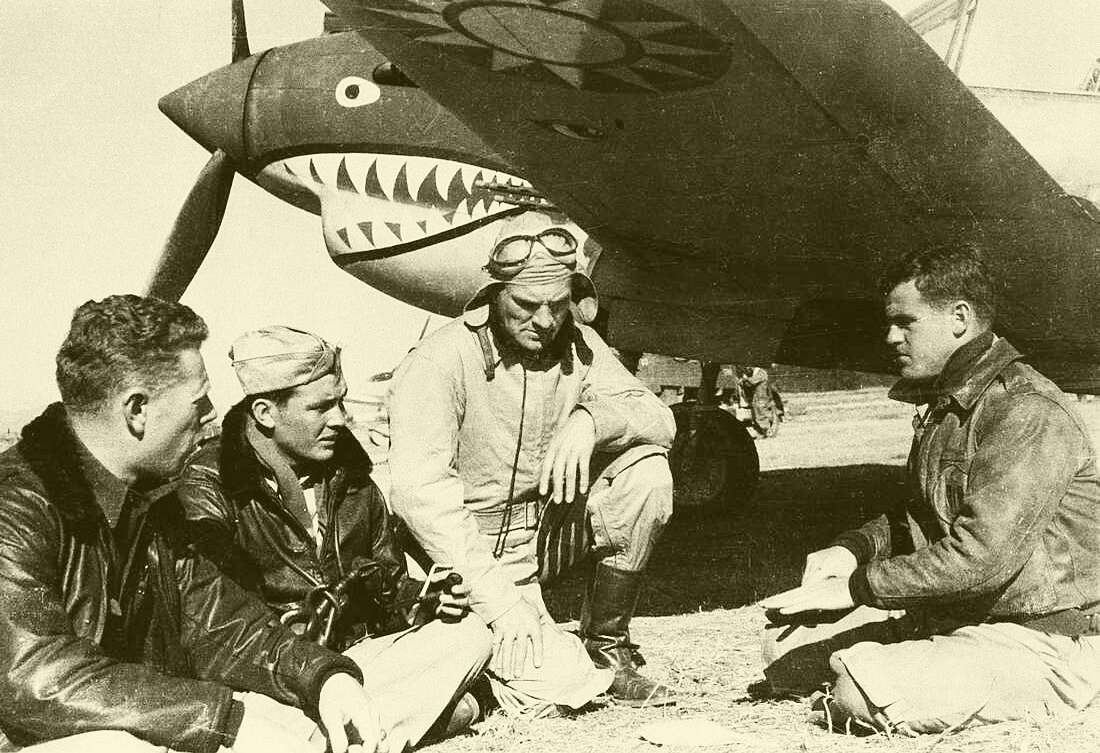
The First American Volunteer Group (AVG) of the Republic of China Air Force, nicknamed the Flying Tigers, was formed to help oppose the Japanese invasion of China. Their Curtiss P-40B Warhawk aircraft, marked with Chinese colors, flew under American control. The pilots were recruited under President Franklin Roosevelt’s authority before Pearl Harbor.
The group was commanded by Claire Lee Chennault and it consisted of three fighter squadrons of around 30 aircraft each. The pilots were trained in Burma before America the entered war. The group’s mission was to defend the Republic of China against Japanese forces. Although unofficially under United States command, the volunteers were officially members of the Republic of China Air Force.
The pilots received bonuses according to the number of enemy planes they shot down. The Flying Tigers were in action during 1940-1942 before being replaced by American units.
Much has been written about this group of mercenary pilots and the dangerous missions they undertook. They were outnumbered most of the time but still managed to hold their own against Japanese pilots. The art on the nose of their aircraft was depicted as the mouth of a shark - similar art can be seen today on some American warplanes.
Although they were only in action for a short period of time, the AVG pilots earned official credit and received combat bonuses for destroying 296 enemy aircraft, while losing only 14 pilots in combat. Members of the Tigers would soon become familiar figures: their leader, Colonel Claire L. Chennault, and pilots like David “Tex” Hill and “Scarsdale Jack” Newkirk.
After the disaster at Pearl Harbor, Americans needed something to give them a ray of hope as the war was going badly for U.S. forces. However, Hollywood and Time Magazine seized on the opportunity to report on any good news. Movie executives knew a heroic story when they saw one, and in 1942 Republic Pictures rushed out Flying Tigers, starring John Wayne as the swashbuckling commander of the unit.
Time Magazine reported, “Last week ten Japanese bombers came winging their carefree way into [China], heading directly for Kunming…the Flying Tigers swooped, let the Japanese have it. Of the ten bombers, said [Chinese] reports, four plummeted to earth in flames. The rest turned tail and fled. Tiger casualties: none.”
According to the Handbook of Texas, “Outnumbered in nearly every engagement, the Flying Tigers earned an extraordinary combat record of destroying an estimated 115 Japanese aircraft in combat and another estimated 300 destroyed on the ground while losing only 12 planes in combat and 61 planes on the ground.”
The Flying Tigers flew combat missions from December 20, 1941, until July 4, 1942, delaying the advance of Japanese forces throughout Southeast China and Burma. On May 7, 1942, the Flying Tigers launched a four-day assault against Japanese forces attempting to cross the Salween River Gorge. Their efforts were instrumental in preventing the Japanese from invading China from the west and India from the east. Considering that this group only saw combat for approximately 8 months, it had an amazing record.
On July 4, 1942, the First American Volunteer Group was absorbed into the United States Army Air Forces as the 23rd Fighter Group. Many of the volunteers transferred back to their former assignments in different branches of the military. Claire Chennault rejoined the United States Army as a general and commanded the former Flying Tigers who joined the 23rd Fighter Group until his retirement on July 8, 1945.