

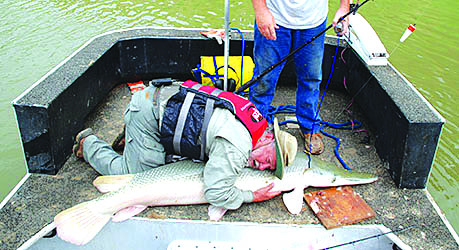
Alligator Gar might be a delicacy to some; it’s still trash fish to me
By Murray Montgomery - Staff Writer
While browsing through the June 2024 issue of Texas Highways magazine, I came across an article that nearly had me laughing out loud. It featured a story about how the ugly old alligator gar was a real delicacy in some Texas eating establishments and how it was dearly loved in the Rio Grande Valley (RGV).
Now don’t get me wrong, I know everyone is entitled to their opinion; but come on, eating trash fish? Now that’s where I have to draw the line; not where I come from. Why, my buddies and I used to climb tree limbs hanging over Oyster Creek, down in Brazoria County, just to shoot the ugly creatures with our .22 rifles.
After I read the Texas Highways story, I got to thinking about how things can change over the years. So, I decided to do a little research on the alligator gar, and now, I’m beginning to think the alligator gar could have gotten a bad rap; he might have just been misunderstood. Am I going to have to eat crow after all this time of hating the beast?
Back when I was hanging in the trees shooting the gars, most folks were happy about it – they didn’t want those water devils killing the good fish – God forbid that one of them could wind up in a stock pond. Like I said before, they were hated. Even Texas Parks and Wildlife Department (TPWD) was trying to eradicate them. In the 1930s, operating under a different name, TPWD actually created an electrofishing vessel dubbed the “Electrical Gar Destroyer” in an effort to eliminate the fish.
Well, I don’t feel so bad now; TPWD has even had to eat crow. Nowadays, the alligator gar is protected – the daily bag limit is only one fish, of any size. There are no bag limits on any other species of gar. You can’t take an alligator gar that is over 48 inches. Whew, I’d still be in jail if they would have had those rules when I was a kid.
According to TPWD: “The alligator gar also plays an important role in keeping Texas’ aquatic ecosystems healthy. Like sharks in marine systems, this fish helps maintain healthy numbers of many other species. Alligator gar primarily feed on fishes such as buffalo, carp, and shad. Although they will eat game fish such as bass and crappie, consumption of these species is relatively uncommon. Just think: some of the most well-known bass fisheries in Texas, including Sam Rayburn, Toledo Bend, Falcon, Amistad, and Choke Canyon reservoirs, also contain healthy populations of alligator gar.”
Texas is now home to the healthiest population of alligator gar in the country and they can live to be over 100 years old. It looks like the creature really has been getting a bad rap all these years – he has been vindicated.
No matter, I still ain’t gonna eat one!