

Lavaca Count Lavaca County Goes To Austin
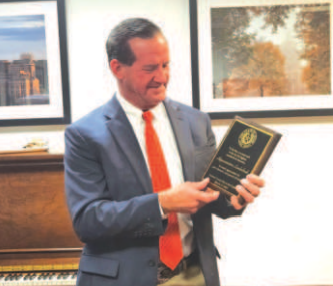
AUSTIN—Education, power security, water availability and crime were heavy on people’s minds as they made their way up the steps to the Capitol Monday for Lavaca County Day.
But as State Rep. Andy Louderback and State Sen. Lois Kolkhorst both alluded to with the 30 or so local constituents who met with lawmakers there that day, the favor lies with the state’s urban centers, perhaps now more so than any at other time in our state’s history.
Places like Houston, Austin and Dallas have exploded in size in recent years, and they have armies of lawmakers and special interests working extra hard to muscle their control of even more of rural Texas.
Thankfully, both Kolkhorst and Louderback are fighting hard to keep rural Texas strong in the years ahead, though both lamented about the uphill battle that continues to be particularly when it comes to items like water rights and with the proliferation of items like windfarms and battery substations, which as they described it, essentially pull power from the grid when its cheap so they can sell it for a profit when prices rise.
The battery stations, in particular, are raising many eyebrows around the common sense corners of Austin. They don’t supply much in the way of power—a few hours worth, at best, presently, should the entire grid go down—but because of things like peak demand hours, they can potentially turn someone a profit multiple times per day, without creating a single ohm of new power.
On the education front, most seemed on board with the proposals for public education, particularly the governor’s much-touted voucher program. What many don’t quite realize about it, however, is that much of it will rely on parent-funded programs, not unlike current health insurance supplement programs or childcare programs. Once again, it will be the cities that see the greatest benefits. Aides with Kolkhorst’s office suspect that fewer than 4% of those living in Lavaca County would ever qualify for so much as a dime of it, as it currently exists in the bill’s wording.
Another education topic that both spoke on at length was the recent proposal seeking approval this session to move the University of Houston-Victoria into the Texas A&M system of schools and become the 12th regional university tied to Texas A&M. Doing so could vastly improve the degree program offerings provided in Victoria, adding engineering and agricultural degrees in a region that could benefit greatly from both, as well as see a return to the face-to-face classroom environment.
COVID and the push for online classes basically killed UHV enrollment numbers, Kolkhorst said. UHV may have been at the leading edge of such formats, but now everyone has them. Because of this student numbers have fallen to as low as 500 students, she said, which is substantially fewer than most of the public school enrollments within our own county’s schools in town.
In another subject close to our own business, Kolkhorst filed a bill along with our state press association to prevent government legal notices from winding up in fly-by-night online publications. As we shared on particular subject, given the limitations of internet availability, such projects could very well cut out local suppliers for various items, not to mention further crippling local news efforts as a lost revenue source. Her bill keeps legals where they belong: in your news pages wherever print publications still exist. We newspapers, after all, are the reason those came to exist in the first place—so anyone, established or new, might stand the chance to benefit from local contract offerings, when they came available.
Most of the lawmakers spent most of the day in committee hearings Monday, but Kolkhorst and Louderback both took time out of their busy schedules to visit with the Lavaca County group.
Many also enjoyed capitol tours and browsing the historic and scenic structure before making their way back home.