

The New World Screwworm; A concern for livestock owners
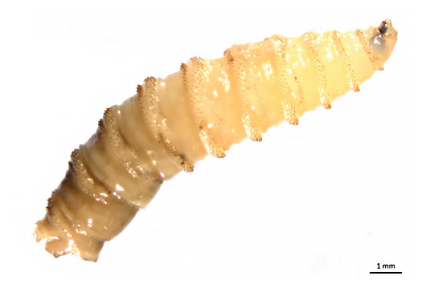
The screwworm was eradicated from the United States years ago, but the spread of this terrible infestation has been occurring in parts of Latin America and the Caribbean as well as moving northward into Mexico and livestock and has placed livestock owners on notice.
According to Texas A&M AgriLife, the infestation is carried by an adult female blow fly that is identified by its metallic bluegreen color with large orange eyes and three distinct stripes running down the top of the fly. The insect is much larger than the house fly.
The parasitic fly, which is native to the Western Hemisphere, lays its eggs in the living tissue of fresh wounds in warm-blooded animals.
An infestation is possible in smaller animals such as cats, dogs or birds, but the greatest economic impact is on larger animals like pigs, goats, sheep, deer and cattle. The screwworm can also affect humans in the nose or sinus cavities.
The mature larvae (maggot) is about 2/3 of an inch in size and feeds on the host’s flesh causing severe wounds. Often if left untreated can lead to death of the animal.
The name screwworm refers to the behavior exhibited by the maggots, as they burrow, or screw into the wound.
These maggots and their feeding cause extensive damage by tearing into the host’s tissue with sharp mouth hooks.
The wound on the animal will become larger and deeper as more and more eggs hatch and the larvae feed on the living tissue.
It can kill a fully grown cow in one to two weeks.
The Texas A&M AgriLife said continual and regular monitoring, and evaluation of all livestock is important for herd and flock.
Livestock owners should be alert for possible signs associated with the infestation including:
• Foul-smelling wounds with visible maggots;
• Animals, biting or licking at the wounds;
• Lesions in navels, ears, and dehorning or branding sites;
• Unusual restlessness or lack of energy in the animal.
According to the United States Department of Agriculture (USDA), efforts to get rid of the pest go back many decades.
Because the adult female fly only mates once, in the 1960s and ‘70s the U.S and Mexico were able to eradicate the New World screwworm by releasing hundreds of millions of sterile adult flies that would mate with the females, which ultimately prevented them from laying viable eggs.
The USDA said this strategy helped create a barrier zone that kept the pest from advancing into both countries. However, cases still popped up from time to time.
In 1976, an outbreak in Texas affected more than 1.4 million cattle and hundreds of thousands of sheep and goats.
The USDA predicts if such an outbreak were to occur now, it estimated it would cost the Texas economy $1.8 billion.
The potential fallout is why agricultural officials are so alarmed that the pest has made a comeback in the last few years.
The USDA said cases have surged in parts of Central America and are now being detected in some remote farms in Mexico. Currently, cases have been reported about 700 miles from the United States border.
Although reported screwworm cases are miles from the United States border, the potential fallout should be vigilant of the spread of the new world screwworm.
For more information regarding the New World Screwworm log onto: https://agrilifeextension.tamu.edu/new-world-screwworm/