

Two new surveillance zones set to test for chronic wasting disease
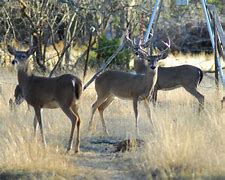
Texas Parks and Wildlife Department (TPWD) launched two new chronic wasting disease (CWD) surveillance zones located primarily in Gillespie and Limestone counties just before the opening of the 2022 deer hunting season on Nov. 5
State officials detected CWD earlier this year in two deer breeding facilities located in each of the respective counties. The surveillance zones enhance state efforts to monitor and contain disease spread.
Hunters who harvest mule deer or white-tailed deer within the zone are required to bring their animals to a TPWD check station within 48 hours. Hunters must check each animal harvested and receive a CWD receipt before taking any part of that animal, including meat or quartered parts, from the zone.
“Testing for CWD allows wildlife biologists and animal health officials to get a clearer picture of the prevalence and distribution of the disease in those areas,” said TPWD Wildlife Division Director John Silovsky.
“Proactive monitoring improves the state’s response time to a CWD detection and can greatly reduce the risk of the disease spreading further to neighboring captive and free-ranging populations,” he said.
The new zone located in Gillespie County encompasses 117,282 acres in the northeastern part of the county and includes parts of Kimble and Mason counties.
Two check stations, complete with self service stations, are set up there. One is at the city park in Harper, and the other on the grounds of the community center in Doss.
The Limestone County zone encompasses 118,687 acres in the norther part of the county. It includes parts of two other counties – Navarro and Hill – allowing access to a processor in Hubbard and a check station in Coolidge.
Hunters can find maps of these and other zones, along with locations and hours of check stations and self-serve drop boxes, on the TPWD website.
First spotted in 1967 in captive mule deer in Colorado, CWD has since been documented in captive and/or free-ranging deer in 30 states and four Canadian provinces. To date, 409 captive or free-ranging cervids — including white-tailed deer, mule deer, red deer and elk — in 16 Texas counties have tested positive for CWD.
CWD is a fatal neurological disease affecting certain susceptible cervid species including white-tailed deer, mule deer, red deer, and elk. The disease is highly transmissible and can remain infectious on the landscape for several years.
To date, no known cases of human catching the disease from animals has been documented, but as a precaution, public health authorities recommend not consuming meat from infected animals.
For more information about CWD, visit the TPWD web site or the TAHC web site.