

The U.S. Flag: Different versions
Old Glory changed 27 times
By Jimmy appelt
jimmy.appelt@lavacacountytoday.com
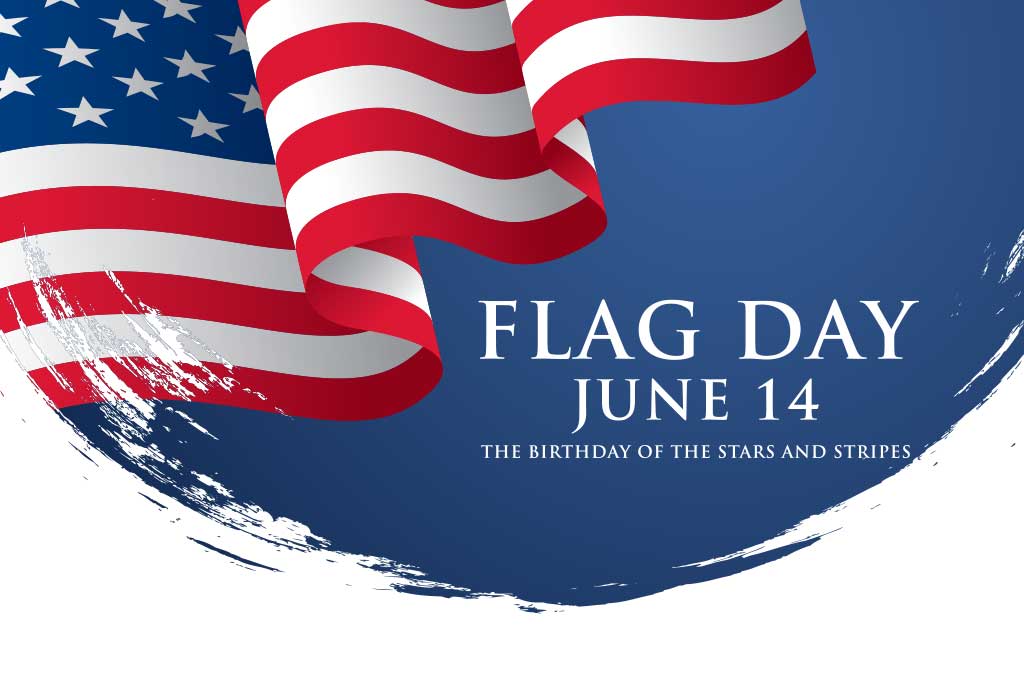
Flag Day is today, Wednesday, June 14 and is a time to proudly display the symbol of our country and what it represents.
Although many of us know what the stars and stripes stand for, we may not realize since it was established as our official flag nearly 250 years ago, it has gone through several different versions before it has become the one we recognize today.
Having 13 alternating red and white horizontal stripes that represent the original 13 colonies along with field of blue in the left hand top corner with white stars representing each state, the flag has gone through 27 versions.
The meaning of the flag’s colors include red symbolizing valor and hardness, white standing for purity and innocence and blue representing justice, perseverance and vigilance.
The very first flag was displayed by George Washington and his troops in January 1776, before colonies gained their freedom from Great Britain.
Containing the 13 alternating red and white stripes instead of blue with white stars, the corner contained the Union Jack and was referred to as the Grand Union flag.
The newly formed Continental Congress did not officially approve the flag and it became the motivation for the colonists fighting for their independence.
Only five months later (May 1776), it is reported that Betsy Ross sewed the first American flag by keeping the red and white stripes, but replacing the Grand Union with 13 white stars in a circle on a field of blue. The 13 stars sewn in a circle was based on the idea that all colonies were equal.
The Stars and Stripes flag became the official flag of the United States of America when the Continental Congress adopted it on June 14, 1777.
The number of stars and stripes on the flag increased in the 1790’s when Vermont and Kentucky became states.
This prompted an act that was adopted on Jan. 13, 1794 and for the next 24 years the flag displayed 15 stars and 15 stripes.
However, when five more states were admitted, the Act of April 4, 1818 changed it back to 13 stripes.
In addition, the act called for one star to be added on the July 4 following the admission of each new state.
As time went by, stars were added everytime a new state became part of the United States. Texas became the 28th star when it joined the Union in 1846.
In 1959, Alaska and Hawaii became the last two states be admitted and the 49th and 50-star was added making flag of today the longest of any U.S. flags to have flown. It will have flown 63 years and has had 13 presidents serve under it.
Throughout history, the flag has become the symbol that displays a significant message around the world.
It depicts a message of national independence and justice to all other countries that the United States is a powerful nation made up of millions of people, who have individual liberties and are patriotic.
Through wars and in times of peace, the American flag has stood for 246 years giving notice to foes and assurance to friends that democracy thrives.
A piece of history, the flag produces a source of pride and unity for all American citizens and stand qualities including liberty, justice, freedom, love of country and national purpose, that make our country the great nation that it is.
Moments in History
• June 14, 1777 – The Continental Congress adopted the 13-star and 13-stripe as the national flag.
• Jan. 13, 1794 – Congress added two stars and two stripes to the flag after Vermont and Kentucky joined the union.
• Sept. 13-14, 1814 – Francis Scott Key penned the “Star Spangled Banner” when seeing the flag flying over Fort McHenry after the British bombardment.
• April 4, 1818 – Congress returned the flag to its original 13 stripes and decided to add a new star for each new state. The star would be added on July 4 following the year of the accepted state.
• June 22, 1942 – Congress established a code for displaying and handling the American flag.
• June 14, 1949 – Congress established June 14 as Flag Day.
• Feb. 23, 1945 – The American flag was raised over Iwo Jima after the United States captured the island during WW II.
• July 4, 1960 – The 50th star was added after Hawaii became the 50th state.