

D-Day: 80 years have passed
By MURRAY MONTGOMERY - Staff Writer - LavacaCountyToday.com
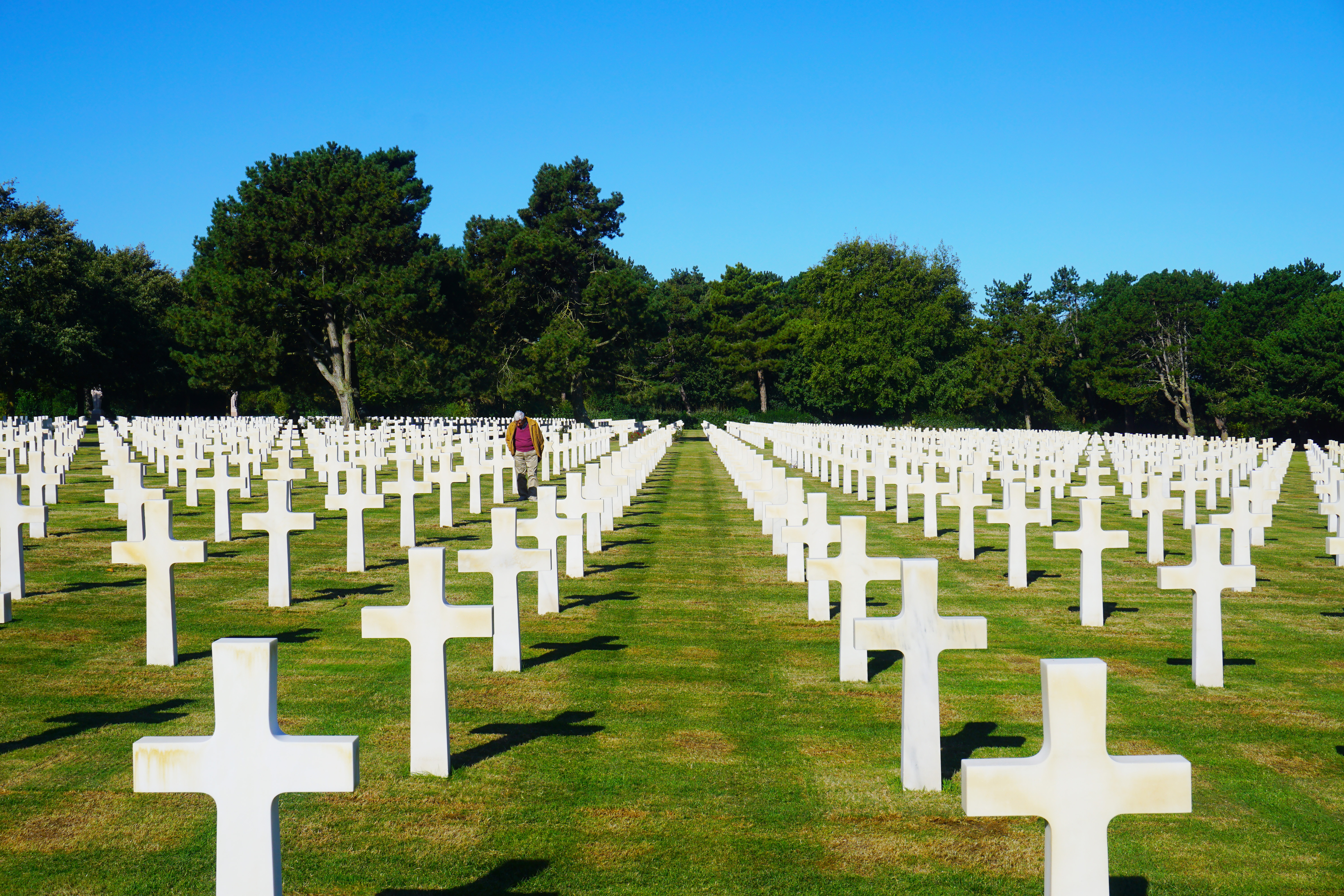
As of June 6, 2024, it has been 80 years since young Americans and their allies from other freedom-loving countries stormed ashore on the beaches of Normandy, France; many men died that day.
A total of 4,415 Allied troops were killed on D-Day itself, according to the Necrology Project, including about 2,500 Americans. More than 5,000 were wounded.
According to the U.S. Army website, the Normandy beaches were chosen by planners because they lay within range of air cover, and were less heavily defended than the obvious objective of the Pas de Calais, the shortest distance between Great Britain and the Continent.
The invasion plan called for six divisions to land on the first day; three U.S., two British and one Canadian. Two more British and one U.S. division were to follow up after the assault division had cleared the way through the beach defenses. As with any large-scale military operations there were problems; disorganization, confusion, incomplete or faulty implementation of plans characterized the initial phases of the landings. However, the Allies were able to overcome these problems and move on to victory.
While researching the story of D-Day, I was amazed by the overall participation by the United States and its allies in this epic battle. Data from England’s Imperial War Museum includes the following: “Allied forces consisted primarily of American, British and Canadian troops but also included Australian, Belgian, Czech, Dutch, French, Greek, New Zealand, Norwegian, Rhodesian and Polish naval, air or ground support.”
After gathering all this information about D-Day, it was inevitable that I would want to know more about how Texans were involved in this monumental confrontation. One notable account revealed that during the invasion, at Pointe du Hoc, a native of Brady, Texas, named James Rudder led the U.S. Army’s Second Ranger Battalion up 100-foot cliffs amid heavy gunfire to capture the Germans’ fortified position.
“Rudder Rangers” saved countless men on the shores below by destroying the German artillery positions ravaging Allied troops on Omaha and Utah beaches. After the war, Rudder, a 1932 graduate of Texas A&M, would go on to become president of that university in 1959. He was president of the entire A&M System from 1965 until his death in 1970.
Also, the Battleship Texas was involved in the D-Day assault. The great ship was ordered to support the landings of the Army Rangers at Pointe du Hoc and the landings at Omaha Beach. The Texas opened fire on her assigned targets at Pointe du Hoc, firing 255 fourteen-inch shells in 34 minutes. During the battle, the Texas had 11 casualties, including one fatality. Now, in 2024, the restoration of the old ship is finishing up; if this aged battle-wagon could talk, she would have some great stories to tell.
D-Day was not the only time that Texans fought and died in World War II. Information found in Handbook of Texas reveals the following: “By the end of the war 750,000 Texans, including 12,000 women, served in the armed forces. The majority were in the Army and the Army Air Force, but nearly one-fourth served in the Navy, Marines, or the Coast Guard. During the war 22,022 Texans were killed or died of wounds.”
World War II was the biggest and deadliest war in history, involving more than 30 countries. Sparked by the 1939 Nazi invasion of Poland, the war dragged on for six bloody years until the Allies defeated the Axis powers of Nazi Germany, Japan, and Italy in 1945.
The Americans who fought in this war have long been known as “The Greatest Generation,” and rightly so. When they were young, the country was just starting to recover from a great depression. Then, when the nation was attacked by the Japanese on Dec. 7, 1941, they were off to war. They fought and died on battlegrounds around the globe – they literally saved the world
D-Day started the liberation of Europe, but there would be many more battles and thousands more would die before it was all said and done. One quote that I have heard many times is so true: "The soldier above all others prays for peace, for it is the soldier who must suffer and bear the deepest wounds and scars of war." - Douglas MacArthur.