

Texas Attorney General reinstated following acquittal on 16 impeachment articles
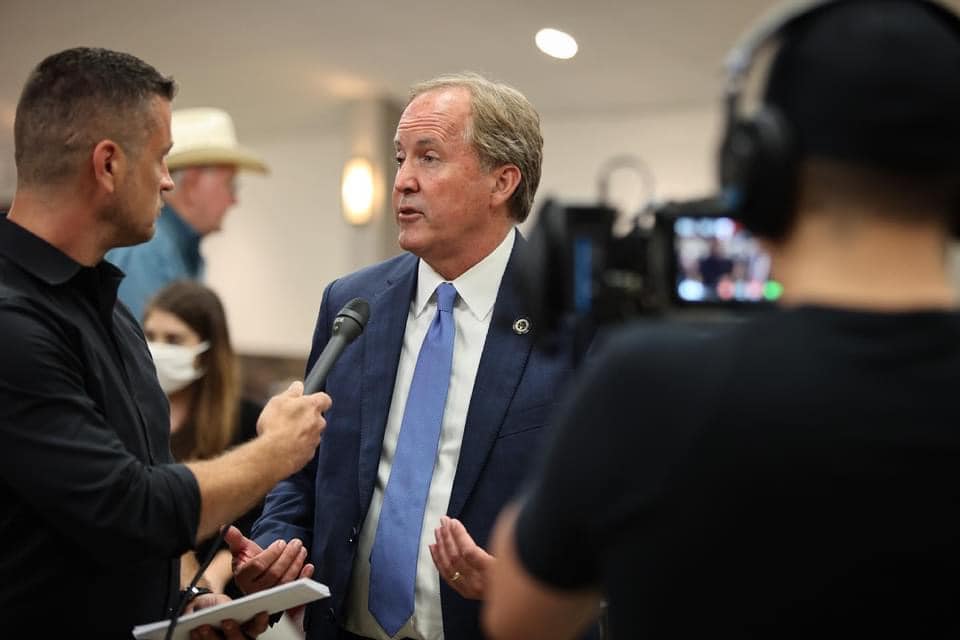
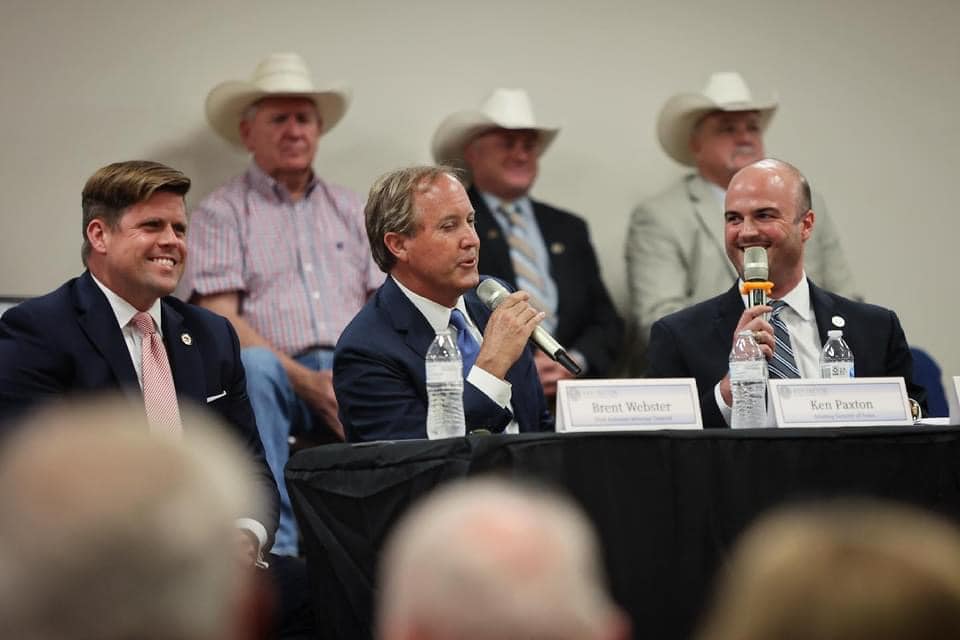
Impeached Texas Attorney General Ken Paxton was acquitted on all 16 impeachment articles, thwarting an effort to remove him from office on corruption allegations, state and national media sources reported Saturday.
“Attorney General Warren Kenneth Paxton Jr. is hereby, at this moment, reinstated to office,” said Lt. Gov. Dan Patrick, the Republican president of the Senate who also presided over the trial.
While two Republican senators broke with their party to vote for conviction on some articles of impeachment, most fellow GOP Texas senators voted to acquit Paxton following a two-week trial and day of closed-door deliberations.
Four impeachment articles previously put on hold during the trial were dismissed immediately after the acquittal vote.
The articles of impeachment accused Paxton of accepting bribes from and giving legal assistance to campaign donor and real estate developer Nate Paul, while disregarding his official duties to the people of Texas. He was also accused of improperly firing employees who reported his actions to federal authorities, lying about his actions, misusing government funds to dispute their allegations and more.
Paxton denied wrongdoing throughout the trial, a point his attorneys fiercely defended.
“The attorney general is excited and ready to get back to work, and that’s what he’s going to do,” said Paxton’s attorney Tony Buzbee. Paxton was suspended from his post without pay after he was impeached in the Republican-controlled Texas House of Representatives in May.
Paxton a proven GOP-driven defender
Paxton rose to prominence as a top legal adversary of the Obama administration, and later as a key ally to the Trump administration. Lawsuits to overturn the Affordable Care Act, legal protections of young undocumented immigrants, and the results of the 2020 election made him a popular to right leaning voters, even after he was indicted on securities fraud charges in 2015.
Paxton was also a force to be reckoned among the current slate of Republican-majority State Attorneys General in legal challenges to Biden administration policies.
An article published in the Washington Examiner on May 29, 2022, noted that Paxton, in President Biden’s first 15 months of office, had already tied the 25 lawsuits that Paxton's predecessor, now-Gov. Greg Abbott, waged against the Obama administration while attorney general.
Paxton would undoubtedly set a record for a GOP state challenging Washington, the article said. What’s more, it also noted that “Paxton’s filing rate is equally as high as his win rate. The federal courts have sided with him in 93% of cases in which there has been movement.”
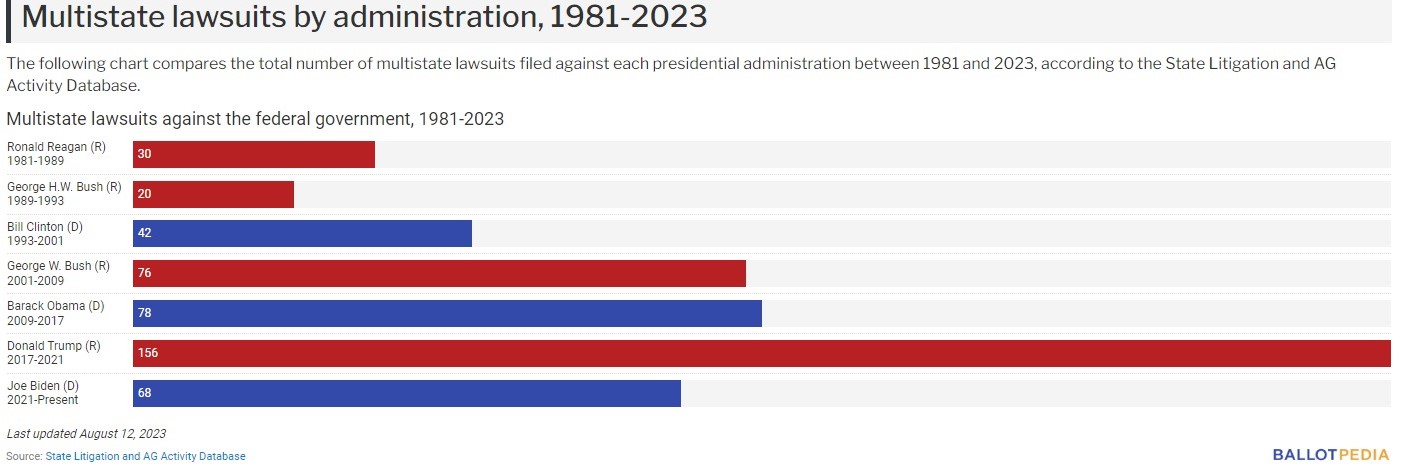
In addition, 68 multistate lawsuits had been filed against the administration since President Joe Biden took office in January 2021 (as of Sept. 2). More than a dozen of those were filed on behalf of the Lone Star State, where Paxton serves as lead litigator. His office also filed multiple amicus briefs in support of challenges lodged by other states.
Fellow Republicans speak out on Paxton’s behalf
In remarks following Saturday’s verdict, Lt. Gov. Patrick lambasted the House for rushing Paxton's impeachment through that chamber and called for a Constitutional amendment to rework the impeachment process.
The lieutenant governor presided over the trial as its judge, and as such, Patrick stayed mostly silent throughout the summer. He didn't hold back on voicing his opinion once the verdict was cast.
“Our founders expected better. It should have never happened this year, and hopefully it doesn't again,” Patrick said Saturday.
Texas Gov. Greg Abbott, also a Republican, issued a statement Saturday on Paxton’s behalf.
“The jury has spoken,” he said. “Attorney General Paxton has done an outstanding job representing Texas, especially pushing back against the Biden Administration. I look forward to continuing to work with him to secure the border and protect Texas from federal overreach.”
Paxton allies vowed to back well-funded primary campaign challengers to any Republican who voted against Paxton, while Trump, embroiled in his own legal battles which accuse the former president and key advisors of corruption and misusing the nation’s top office, made it clear that he, too, backed Paxton.
COMMENTARY
The OTHER impeachment case in Texas… No, really…
(Or, how impeachment overuse tends to cloud its effectiveness)
By BOBBY HORECKA
Managing Editor
While the eyes of Texas and many across the nation were upon last week’s impeachment proceedings in Austin of Attorney General Ken Paxton on allegations he misused his office—on which Paxton was acquitted Saturday afternoon by vote of the Texas Senate (see related story)—writers at The Texas Tribune on Friday opted to turn their attention to another impeachment case happening simultaneously 100 miles away at Austin’s most storied rival.
That’s because College Station finds itself in the news spotlight once again this summer for all the wrong reasons.
Let me pause right here, first off, because I can already hear the complaints lighting up my phone lines once this story publishes based on what’s said in these two sentences alone.
No, we’re not pandering to the Austin liberals over at Texas Trib, who just last month announced they were letting several writers go—including some who were there for its founding in 2009—because they somehow managed to overextend their budget. At a nonprofit publication, no less.
Curiously, they established this new-fangled nonprofit business model to avoid such layoffs and cutbacks the rest of us were facing in the traditional media right about then.
When places like the Trib headhunted our very best writers, editors and news minds at the time, it certainly didn’t help the rest of us at all. Now they’re facing the same sort of cutbacks we all do, driven by the same diminishing ad dollar that’s plagued our industry especially since the early 2000s. Only now, they gave it a different, rebranded label.
Still, they broke some truly impressive stories, especially in those early years. It surprised none of us watching. With the sort of talent they had, we expected more, frankly. It’s why we still follow what they publish, alongside dozens of other sources, so we can stay on top of the issues and news items we bring our own readers each week.
And if it helps you sleep any easier, most of this story originates in The Battalion, Texas A&M’s student newspaper.
Next, we have no desire whatever to disparage our friends in Aggieland. We have far too much respect for that institution to even toy with such notions, along with enough functioning brain cells to know that such dalliance would be met severely—with a ride on the nearest rail, most likely—once the tar and feathers were properly applied, of course.
Rightly so, we also believe.
Still, bring up names like Kathleen McElroy or Katherine Banks and even the most ardent Aggie will tend to wander off; sure beats trying to explain it, anyway. So, to say Texas A&M has had a bad run of luck lately when it comes to media attention is a practice in the understated arts.
Just know we didn’t cause it, we’re not rehashing it, nor are we pointing fingers. We’re just saying: Recent weeks’ events haven’t offered the brightest examples of Aggie pride and tradition.
The latest centers around the duly elected Texas A&M student body president, Hudson Kraus, who members of the student senate accuse of misusing his office to benefit someone close, much like state officials claimed in Paxton’s case earlier this year in Austin.
Kraus reportedly edited a job description for a cabinet post to better align with his little brother’s qualifications, who is also a student at the school. In the end, Kraus’ brother got blocked from the appointment, and despite Kraus’ formal though private apology, the student senate appears bent on impeachment.
Kraus asked that senators reconsider impeachment, arguing he made a mistake that did not reflect a broader pattern of behavior. Thus far, the senate hasn’t budged.
Just before the start of the trial last Wednesday, Kraus filed an appeal to the Judicial Court of Texas A&M, a procedural move made when you believe an error in student government procedures occurred. It allows both sides to present cases to determine the fate of the appeal.
“As family is incredibly important to me, I just wanted to try and protect my brother and see what was best for him to occur,” Kraus was quoted. “Unfortunately, I made inaccurate decisions that were not indicative of my character in trying to defend a member of my family.”
A judicial panel will decide if the trial continues, or the case gets dismissed. That decision wasn’t expected until after our news deadline this week.
That’s all according to The Battalion, by the way.
Responses to emailed requests from The Texas Tribune went unanswered, they reported. To be fair, that was neither oversight nor snub. Rather, much like Lt. Gov. Dan Patrick told state senators before Paxton's trial began, the Texas A&M Student Government Association members are under gag orders when it comes to discussing the case.
It’s an order they took seriously, in both Austin and College Station.
It’s one of many ways the two cases—Paxton’s and Kraus’—parallel one another. Admittedly, they’re miles apart in overall scale and consequence. Still, that TWO impeachments might be taking place, simultaneous, should be right next to impossible, even in a place as diverse and prone to oddball occurrence as Texas.
Historically, impeachment was reserved as a nuclear option when all other solutions to give an elected official the boot fail. That’s not how it gets used today, however. In fact, the threat of impeachment has picked up steam, especially in the last decade.
Here’s where the folks at the Trib noted something we felt well worth consideration:
The parallel impeachment proceedings — at two very different levels of government — highlight how the once obscure political tool to hold elected officials accountable for grave errors in judgment and malfeasance has become en vogue. . . It erodes their effect as something commonplace, political experts say.
There’s a disturbing thought: It’s considered almost stylish now to say you’ve been impeached, which makes former President Donald Trump a fashion pinnacle because he got impeached not just once but twice. All in a single term of office, at that. He, too, was acquitted. Twice.
“It’s being seen now more as an everyday occurrence than a rare one,” said Brandon Rottinghaus, political science professor at the University of Houston. “Political opponents are looking for a way to ramp up their attacks on opponents, so using the institutional levers of government to do that is the next step,” he said.
The problem only worsens as political sides, spurred by the instant communication platform social media provides, have made their fights more public than ever.
“We’ve watched like spectators at a boxing match,” Rottinghaus said, but smaller governments are taking notes and using practices like recall elections — or “little impeachments” — to get their way. “These are small-scale politics, but they’re taking their cues from institutional friction,” he added.
Indeed, the impeachments in Austin and College Station also come as U.S. House Speaker Kevin McCarthy, a California Republican, announced his support of an impeachment inquiry into President Joe Biden calling it the “logical next step” after months of probing by House Republicans into the Biden family.
Rottinghaus said the constant threat erodes people’s faith in the process. “Impeachment is something people, historically, hope to use as a last resort and in very specific circumstances,” he said. “If they are perceived to be just business as usual or a political weapon, it’ll cease to be effective.”
Impeachment facts and figures in history
• Prior to the hearings which began last month in Austin over Attorney General Ken Paxton, just two state officials had faced the public impeachment process since Texas attained its statehood in 1845. They were Gov. James “Pa” Ferguson, a Democrat, who was impeached in 1917 and removed from office on embezzlement charges and other crimes; and then State District Judge O.P. Carillo who after 1975’s impeachment proceedings, earned three years in prison and a tax fraud conviction after he “schemed to take Duval County taxpayers’ money through phony equipment rentals.” The judge got stripped of his office, booted from the state bar association, and forced to repay some $300,000 in fines and court fees.
• At the federal level, the U.S. The House has approved articles of impeachment 21 times for 20 federal officers. Of these, 15 were federal judges: 13 district court judges, one court of appeals judge (who also sat on the Commerce Court), and one associate justice of the Supreme Court; a cabinet secretary, a U.S. Senator, and despite every sitting president since John F. Kennedy (as well as many of their vice presidents and various cabinet members) having been threatened with, at very least, the possibility of impeachment proceedings during their respective administrations, just three sitting presidents ever actually were impeached: Andrew Johnson, Bill Clinton, and Donald Trump (twice).
• Trump earlier this year became just the third president ever impeached, joining former presidents Andrew Johnson and Bill Clinton in that select membership group. Trump’s unique in that he’s the only U.S. president to ever be indicted twice, a feat he also managed in just one term of office (so far). Johnson, who was appointed to the presidency following Lincoln’s assassination, was impeached in 1868 for his firing war secretary Edwin M. Stanton, a member of his own cabinet, in favor of Gen. Ulysses S. Grant, who would later assume the presidency himself. Clinton was impeached for perjury and obstruction of justice in the Monica Lewinsky scandal (1998-1999), in which the president was accused of having an illicit affair with a White House intern over several months, a woman who was about the same age as Chelsea at the time, Clinton’s daughter. For now, the important thing to remember about these impeachments is that all four cases—Johnson’s, Clinton’s and Trump’s two cases—is that they all ended in acquittals.
• President Richard Nixon came the closest to an actual impeachment of all those presidents threatened with impeachment. Congress, in fact, was drafting its impeachment proceedings against him over the Watergate scandal, but Nixon gave up the presidency before they could finish, forcing Congress to withdraw its articles of impeachment. Keep in mind, the only thing an impeachment will cost a seated president, should they win every charge raised against him, is the office itself. No small thing indeed, but it's hardly a criminal charge. For state level officials, like Paxton or any of the fellows before him, an impeachment can result in immediate arrest for anything but an acquittal of charges against him. Not so when dealing with the nation's president. Loss of title is really the worst-case scenario. A separate Senate vote is needed to determine if he/she is eligible to ever serve again, or if any of his benefits (like lifetime Secret Service protection, salary and even health care) might be in jeopardy. An entire other proceeding is necessary to charge him with a crime.
• Which brings us back to Clinton's case: While he never admitted to the alleged affair with Monica Lewenski (or any of the other half dozen or so women who raised complaints against him, at the time), most everyone was certain he was lying through his teeth about it. Republicans, led by Newt Gingrich, Tom DeLay and others, stuck to their guns, saying he committed perjury. He should resign, they pressured. Most on Capitol Hill, however, while agreeing he most likely lied, questioned the thing he lied about. The original accusations against him, mind you, started out with questionable real estate dealings, which occurred long before he ever darkened the White House door as president. When they couldn't find anything that stuck there, the impeachment case devolved into his philandering. So, did his lying about which woman he did or did not have extramarital relations with make him a bad president, necessarily, or just a bad husband? Most agreed that affairs definitely dealt with the latter, which hardly an impeachable offense, especially considering his loudest opponents were later found guilty of the same infidelities they accused him of, along with few indictable offenses as well. Still, the GOP leadership stayed on, most believed, because they thought it might give them the upper hand through the midterm elections. A grave miscalculation, it turned out. They actually lost seats, and the president's popularity grew because of it, supplying endless fodder for some of Saturday Night Live's best-ever political skits.
• Clinton, not surprisingly based on his prior track record with women up to then, did not fare well with the entire Me Too Movement. Most of the attention fell on Hillary right then, who was involved in one of her many failed attempts at the White House, though this one was by far her most successful bid. It was against Trump, who walked away the victor in that fight to the surprise of many in Washington at the time. Given some of things said by the President-elect during that campaign, however, made the Bill most folks remembered from his final days in office seem like a rank amateur by comparison, frankly. What few people realized, I'm fairly certain, was that the number of women who filed complaints against him increased nearly five-fold during that same time. And no longer were they claiming extramarital affairs, or simply inappropriate contact. There was a whole contingent of women claiming all out rape against the former president, dating all the way back to his own college years. Several even accused Hillary of enabling her husband's infidelities to the point that she actually revictimized women that her husband had brutalized, allegedly, of course. Now in his late 70s, Bill's actually outlived a few of his accusers now, but shocking was the number of lawsuits he settled since, and the millions he willingly paid to do so, all handled remarkably quiet during a time when most men of any renown whatsoever were granted anything but by their accusers.
• So, what laid the groundwork for the threat of impeachment during all those other administrations? Well, LBJ's dated back to before his presidency; he was accused of corruption as Kennedy's vice president, an accusation that ultimately led to the resignation and, later, conviction for tax evasion of Bobby Baker, his undersecretary while as he headed the U.S. Senate. Many questioned his role in President Kenedy's assassination as well. Nixon's plate was so filled with possibilities it's hard to know where to start, but the Watergate scandal was the one that ultimately won out. Bribery, illegal payouts and tax evasion were the crimes of the week through the Ford administration, and no one was immune to the accusations. Carter had a multitude problems and infights from within his own party during his administration, an energy crisis and ultimately the release of the hostages to contend with, but it was accusations of bad banking business and questionable political contributions that nearly did him in.
Reagan was another one who had quite the plateful, what with savings and loans collapsing, the wed tech scandal involving bribes given for defense contracts, the HUD scandal, Sewergate, astronomical sums spent in under the table expenditures as part of the Cold arms build-up, but easily the most famous scandal of his presidency came with the Iran Contra Affair; it was also the one that brought him closest to impeachment proceedings. George H.W. Bush had the repercussions of Iran Contra to finish off in his administration, and never shook the suspicions that surrounded him especially with his intelligence background as CIA head, followed by a series of poor choice appointments (think Clarence Thomas and sexual harassment claims, for instance). Clinton started with Whitewater, a real estate deal, and ended with Lewinsky, and continues with some two dozen women claiming he wronged them now and several even claiming rape. George W. Bush had the Walter Reed veteran neglect scandal, Lawyer Gate (his firing of 11 top prosecutors within the Justice department without explanation), warrantless surveillance and enhanced interrogation techniques, but the one that nearly got him impeached were the weapons of mass destruction—his reason given for invading Iraq on the world stage—the ones that no one ever found.
Obama had countless ethics violations lobbed at those in his administration, IRS targeting, gunwalking, cyber-intrusions, but it was the handling of documents especially while abroad that nearly did the entire party in during what became the Petraus scandal. Trump's allegations of Russian interference in elections prompted Round 1; Round 2 came with accusations he incited the Jan. 6, 2021, attack on the capitol. Both of which have turned up a number of criminal court cases since. Biden is another with a loaded plate, most of which Paxton and other GOP states have successfully challenged the legality of and won, but it will likely be the dealings with his son, Hunter Biden, now accused of corruption, which ultimately cause the most damage provide the best opportunity for impeachment. We shall see, however...