
Catholic School work camp offers more than just a hard day’s work
‘You couldn’t ask for better'
—Wardel Gates, Shiner resident, retiree and cancer survivor
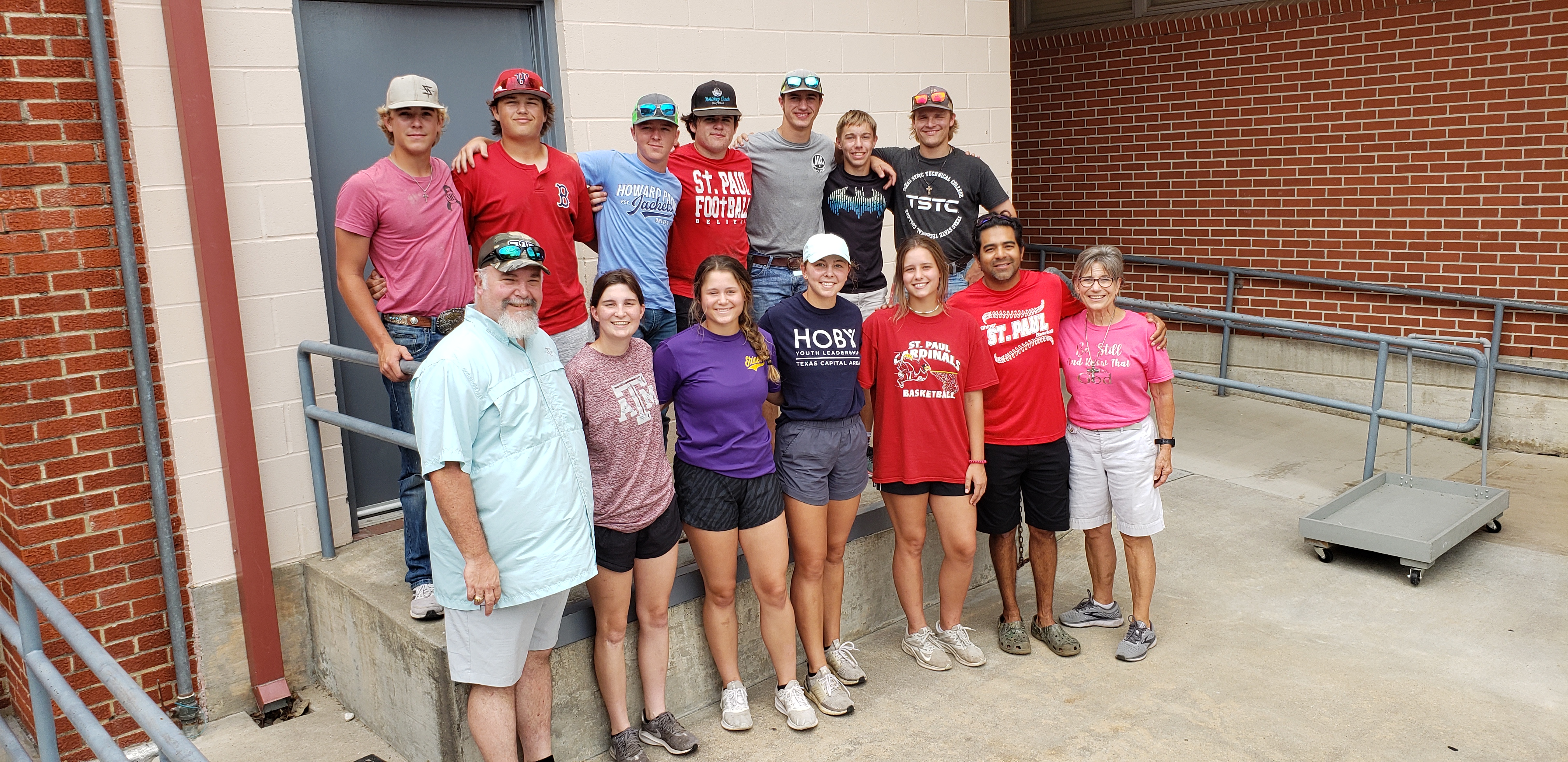
What do you get when you take 60 kids, give them 18 separate work projects and then send them forth, all over town, on three of the hottest days yet this year to get it all done?
Well, the answer to that question depends entirely on two items, really. The first, obviously, involves where it is, precisely, you might live. Where you hang your hat, so to speak.
Because there’s a lot of places where you may never see any of those kids again. Like, ever…
And that’s no joke, either. What’s worse, sadly, is that there’s probably a larger percentage of the population, across our nation, where this would be enough of a concern to nix said projects altogether, or at very least, lead to the institution of some ridiculously complicated travel strategy and location monitoring system that it seems hard to imagine someone wasted so much time to think up such nonsense.
The second part to consider involves not so much the where but the who of it all. That is, it truly depends on who you ask. Because—again, depending on that first part of where you live—the reviews there could vary drastically.
So, what happens when it was OUR 60 kids last week — most of them, current or incoming Shiner St. Paul students — and you tell them to go forth and fix stuff?
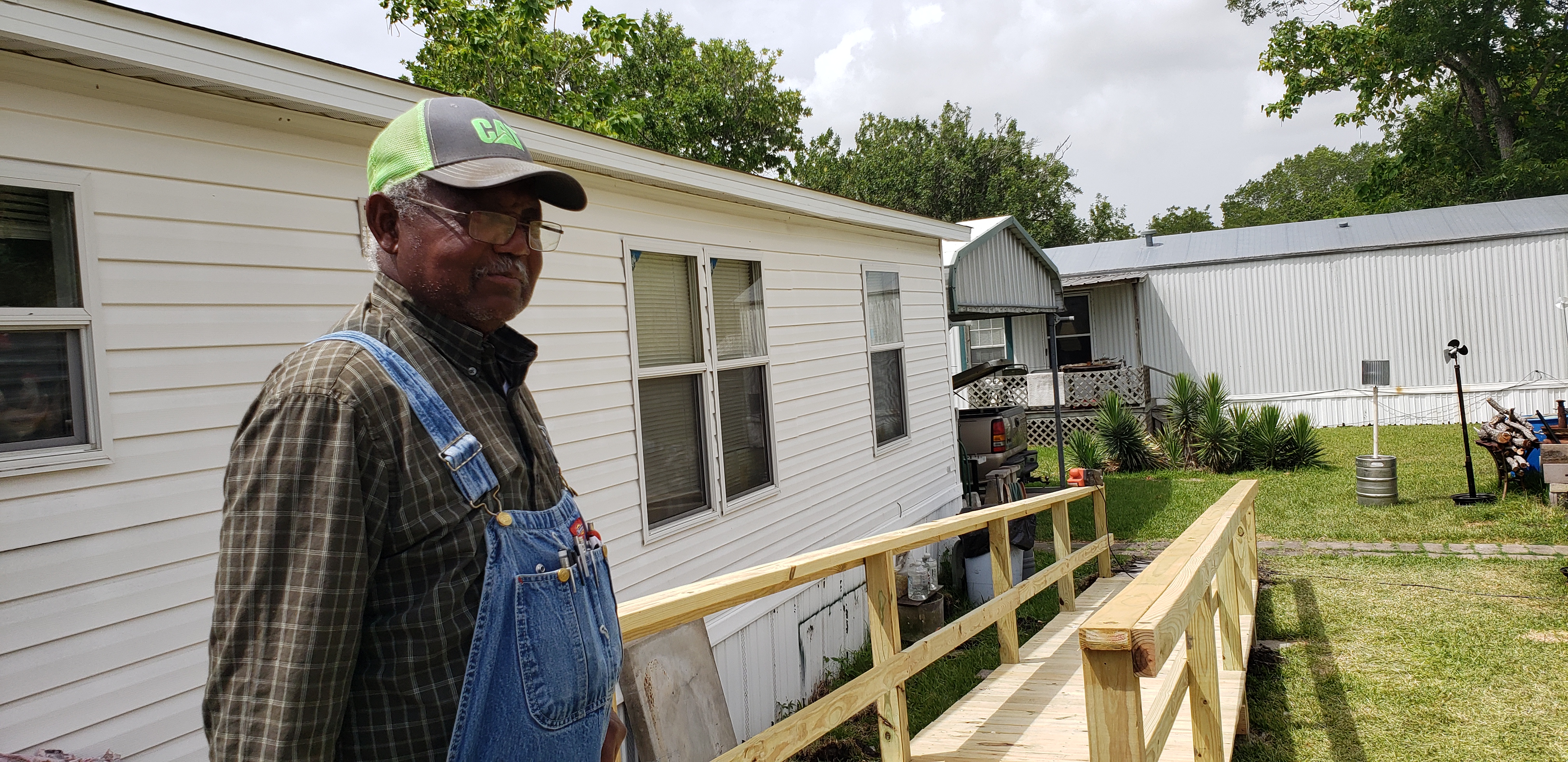
Well, we couldn’t think of a finer fellow to go and ask than Mr. Wardel Gates of Shiner. We caught up with him right before lunch, last Wednesday, out in his yard just off Shiner’s North Avenue H.
So, what does a retired oil company man who, as he shared with us, just doesn’t have strength left to do such projects himself anymore—not since that blasted cancer showed up a few years back, anyhow—have to say about the work that some of those very kids did for him?
“You couldn’t ask for better,” he told us. “That’s some solid work right there. I just can’t thank them enough.”
It was hardly a piddling thing, either. Rather, it ran the entire length of his house. He was standing on a serious structure, a wheelchair ramp to be exact, one that I’m pretty sure would hold my truck up without making a peep. Complete with handrails, no less, and a poured concrete footer where it came to the ground. All built to the perfect recommended slope that those ramps ought
By all, I mean exactly that—the ramp itself, those handrails up top, even the concrete portion at its base—everything shared the same slope.
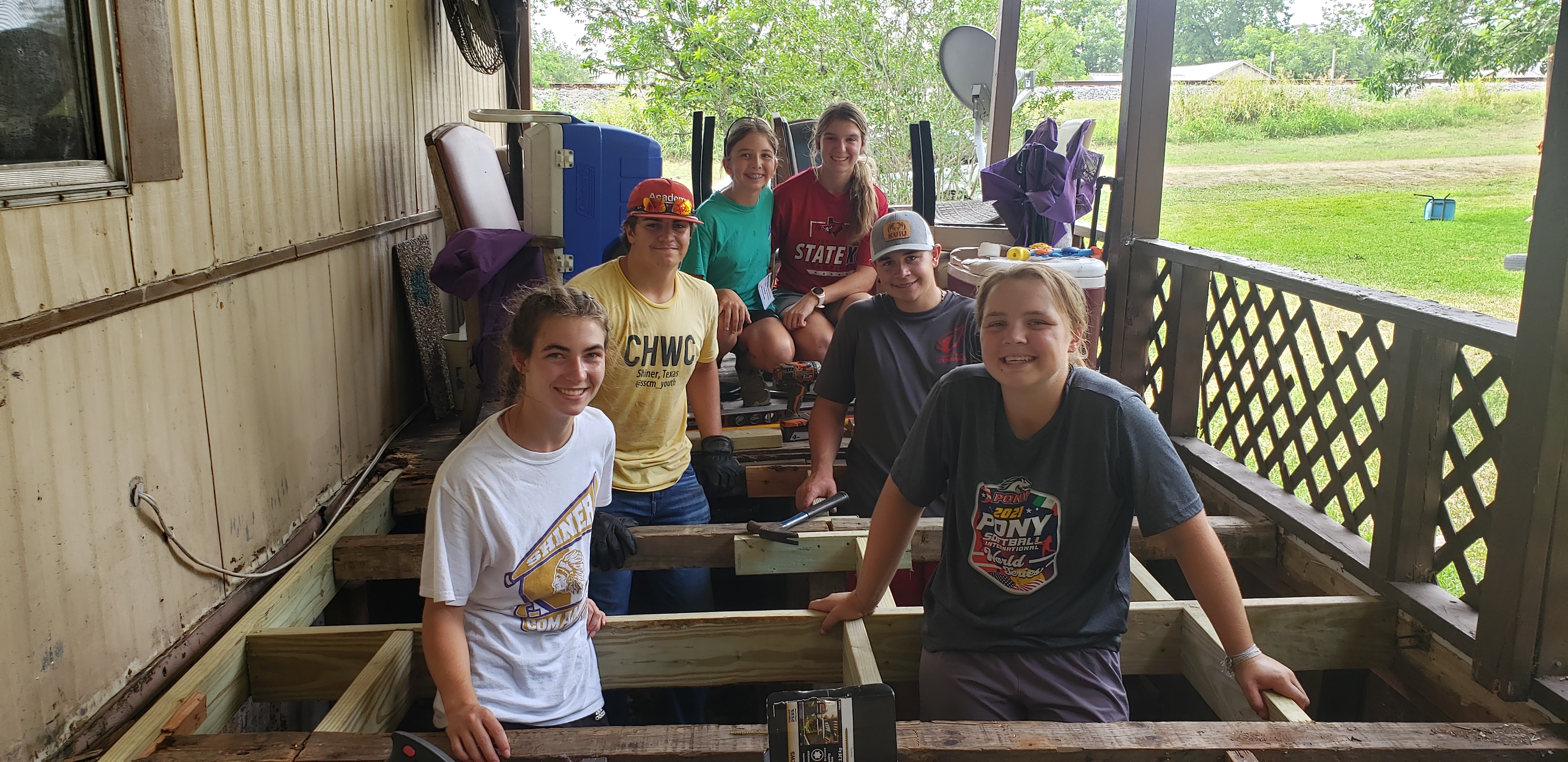
Across town, over at 7½th Street—seriously, I had no idea such an address existed in Shiner—Charlie Greathouse had a half dozen or so kids still working at his place. The kids there had likewise built an impressive ramp—equally stout and precise—but with it all done about a day earlier than anticipated, the kids there took it upon themselves to do something about Mr. Greathouse’s porch, too.
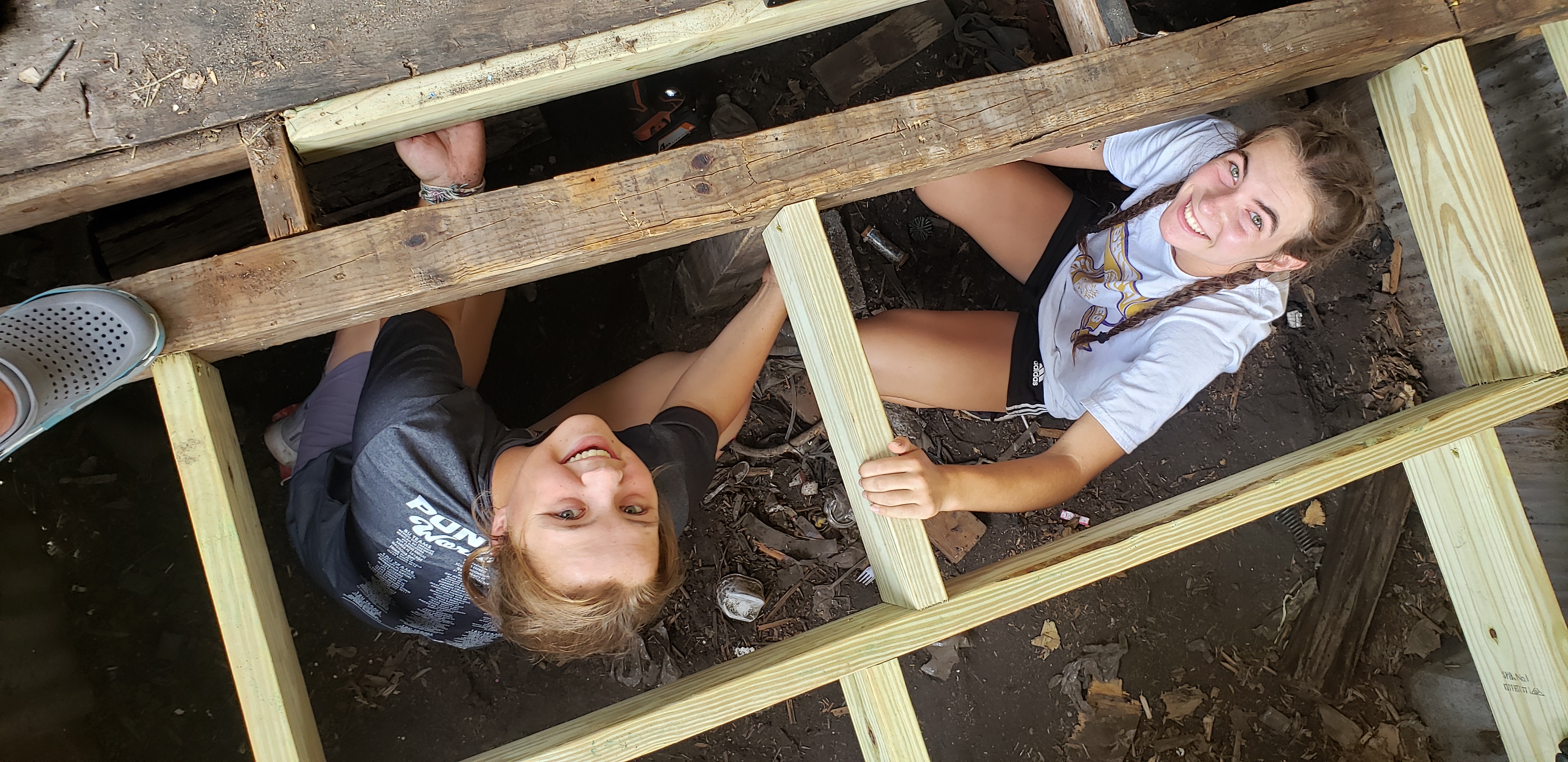
It had a few—well—issues, you might say. The largest being that much of the lumber used to construct the original deck, years ago now, had simply deteriorated with age. It left a good portion of the roughly 8x32-foot structure which serves as the main entry and landing point for the Greathouses’ mobile home, looking more like some old sway-back mule than something you’d want to walk across.
Even with a ramp you could drive a tank up, it’s all rather pointless if you fall through the porch before you made it to said ramp, the kids agreed. So, they started carefully lifting the plywood panels to expose the porch’s underbelly, where after checking for snakes and whatever else might be lurking below, they began addressing its many cross beams and supports, one problem board at a time.
By the time the newspaper caught up to them, they were nearly two-thirds of the way done, about to start re-sheeting the top to finish up.
“They’ve done real nice work,” said Greathouse, who poked out his head a short while after we arrived. “It sure helped us out a lot, and we love their work. I can’t tell you how thankful we are for it.”
The kids involved on that project—four girls and two guys, most of them having just completed their freshman year at Shiner St. Paul—said they learned all sorts of stuff, working on these projects the last few days.
“Sure, it’s all about building and stuff, but it’s also about problem solving, too. We have to figure out how to get to it, sometimes. Then, once we’re there, identify what the problem is and come up with the best solution for it,” one of the girls explained to us.
Clearly, it involved a lot more than banging a hammer or using some power tools. As several adult leaders later explained, they work hard at letting the kids figure things out on their own. The adults we spoke to said that their main purpose is getting the kids around town and providing them the tools they need to do a job. The rest is all up to them.
The adults, too, said they learned quite a lot in the experience. The biggest of those being just how capable those kids truly were.
“When we were first planning these projects, we were worried on some of these that perhaps we had too much planned for them, that we might get something started but actually have to come back later and finish it off ourselves, after all the kids were gone,” said Sharon Patek, who served as our guide and transport to the various job sites around Shiner.
They even sought the advice of folks who did this kind of work for a living.
“These kids are simply amazing,” she said at about noon Wednesday. “Here we were worried we had too much for them, and most of them had them pretty well done by this time yesterday.”
So much so, in fact, the kids were coming up with their own projects now, much like the group had done outside the Greathouse residence. Another large group had gone off to the local cemetery, where they were busy, neating up the gravesites and yanking up weeds.
She went on to explain that the local summer work camps got started locally about 2012, after the church embarked on its first mission trip, which took a busload of school kids off to another state to work for a couple of days. Most of the adults came back dog tired from the trip, she recalled, but the kids were energized.
And because such trips can prove costly, they decided the next year to try and do the same sort of work projects as they’d done elsewhere but focus on things here at home. Thus began their alternating schedule, every other year since.
“I’m rather embarrassed to say this, but I lived here in Shiner for most of my life now,” Patek told us. “It wasn’t until I started seeking out these projects that it ever occurred to me that we even had a need for such things, right here in our own backyards. How I managed to live here all that time without realizing that such needs exist here as well is rather embarrassing to me now.”
That the kids might stay at a church or school campus while they are on the road for these projects I took as a given. Here at home, however, I just assumed they all went home to sleep at night, coming back the next day to pick up where they left off.
Not so, the kids told me. Rather, they camp out in their classrooms, the boys all in one building and the girls in another. In the morning, they have breakfast, go to mass together, and then head out to the job sites. At the end of those workdays, they come back to sing songs, play games, discuss what they learned that day from a spiritual perspective, and join their voices together in prayer before calling it a night.
“Everybody focuses on these work projects, but there’s a lot more to it than just that,” said Jessica Fikac, one of the 15-year-old campers there. “It’s all about forming a closer relationship to God, and all of our classmates here as well.”
“Upside down,” Jessica’s friend Emily Moeller said. She’s another 15-year-old St. Paul student, motioning with her hands to explain it more.
Even as Emily later noted, despite Jessica prefacing her original words to us with she wouldn’t know what to say in a news interview, she certainly proved to be a remarkable spokeswoman for her work group.
“Upside down—oh yeah—that deals with how we need to let go and put things in God’s hands, or God will turn your life upside down,” Jessica said, going on to review what sounded to be an entire week’s lessons on confession, prayer, reflection, faith and adoration.
“So, there’s a lot more going on than just some project someplace,” she said. We’re connecting, learning, building our faith. I don’t know about everyone else, but I think I’ve made some of my best high school memories ever, right here at these camps.